Forestry Mulching vs. Traditional Land Clearing: Which Is Right for Your Property?
When planning a land clearing project, one of the first decisions property owners face is how the land should be cleared. In Oregon, the two most common approaches are forestry mulching and traditional land clearing methods such as excavation or pile-and-burn. While both methods can be effective, they serve different purposes depending on the property, vegetation, and long-term goals.
Understanding the differences between these approaches can help landowners make informed decisions and avoid unnecessary costs or site damage.
What Is Forestry Mulching?
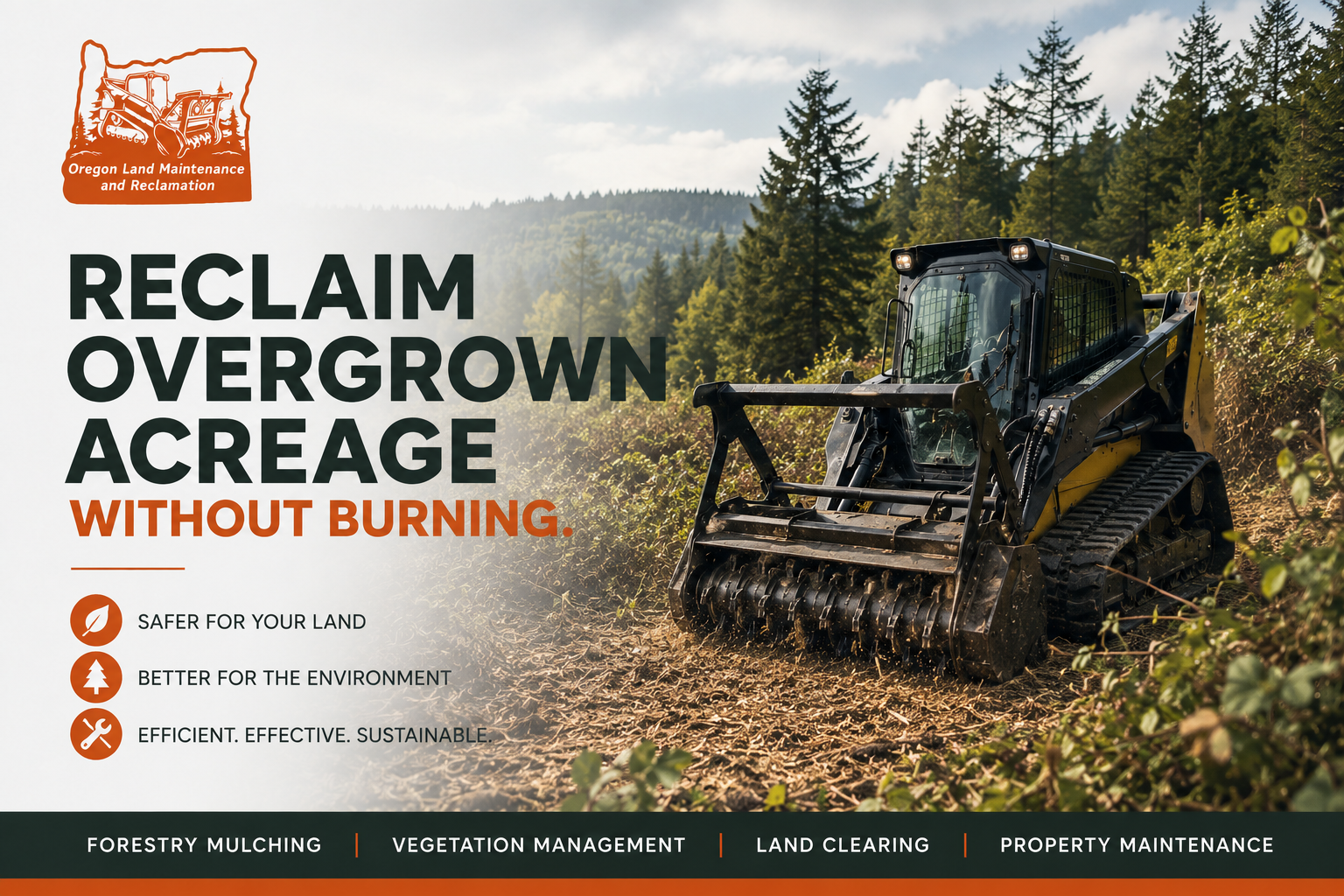
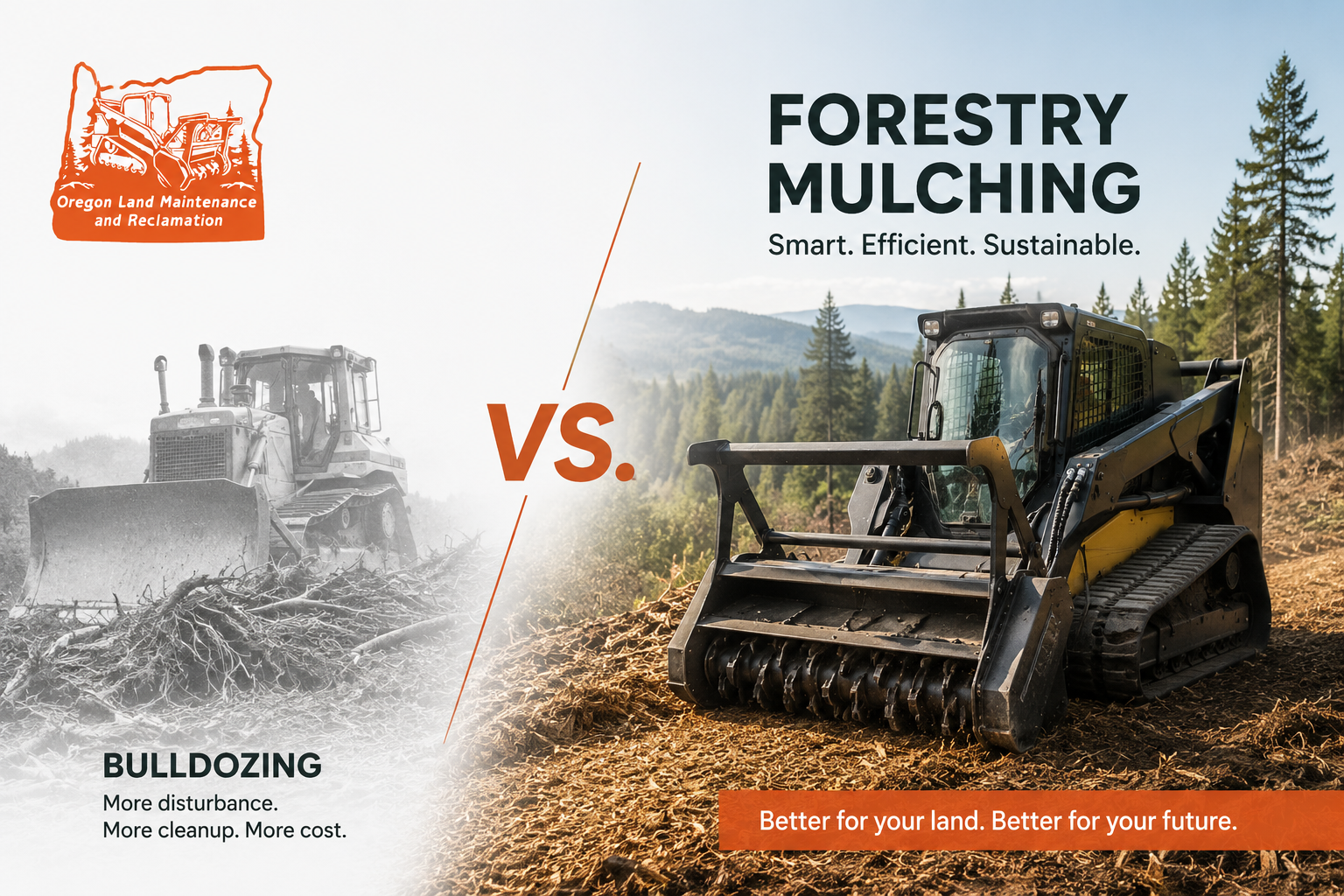
Forestry mulching uses specialized equipment to grind trees, brush, and vegetation into mulch, leaving the material evenly distributed across the ground. Unlike traditional clearing, this process removes unwanted growth without pulling roots or disturbing the soil structure.
Forestry mulching is often used for:
- Brush and undergrowth removal
- Invasive species control
- Fence line and boundary clearing
- Fuel reduction and wildfire mitigation
- Maintaining trails, access roads, and right-of-ways
Because vegetation is processed on-site, there is no need for hauling debris or burning piles, making it a cleaner and more efficient option for many properties.
What Is Traditional Land Clearing?
Traditional land clearing typically involves heavy equipment such as excavators and dozers to remove trees, stumps, and root systems. Debris is often piled, burned, or hauled off-site. This approach is commonly used when the goal is full site development.
Traditional clearing may be the better choice for:
- Building pads and foundations
- Road construction
- Agricultural development
- Large-scale grading projects
- Sites requiring complete vegetation and root removal
While effective, traditional clearing can result in greater soil disturbance and may require additional site stabilization afterward.
Key Differences Between Mulching and Traditional Clearing
Soil Disturbance
Forestry mulching minimizes soil disruption, helping reduce erosion and preserving ground stability. Traditional clearing removes roots and vegetation entirely, which may require erosion control measures after completion.
Environmental Impact
Mulching leaves organic material behind, returning nutrients to the soil and reducing dust and runoff. Traditional clearing often generates debris that must be managed separately.
Cost and Efficiency
Mulching can be more cost-effective for selective clearing and maintenance projects. Traditional clearing may involve additional costs for debris handling, hauling, or burning.
End Use of the Property
Mulching is ideal for maintaining natural landscapes or improving access without changing the land’s overall structure. Traditional clearing is better suited for projects that require bare ground and structural preparation.
Choosing the Right Method for Your Property
The best land clearing approach depends on several factors:
- Property size and terrain
- Type and density of vegetation
- Intended land use
- Environmental considerations
- Long-term maintenance plans
In many cases, forestry mulching and traditional clearing can even be used together, depending on different areas of the same property.
Working With an Experienced Oregon Land Clearing Contractor
Land clearing in Oregon presents unique challenges, from varying terrain to moisture conditions and vegetation types. Working with an experienced contractor ensures the right equipment and method are used for your specific property.
Oregon Land Maintenance & Reclamation works with property owners to evaluate each site and recommend the most effective approach—whether that’s forestry mulching, traditional land clearing, or a combination of both.
Ready to discuss your land clearing project?
Visit https://www.oregonlandmaintenance.com or call 503-871-9487 to learn more about forestry mulching and land clearing services throughout Oregon.